
I was a bit intrepid coming to a big city after spending time in quaint old towns. I expected all that typically comes with it. The tourist traps, people hawking you, dirty, homeless, needing to hide your wallet in a money belt, and not venturing too far from your hotel. Warsaw was quite the opposite. Over the three days we were here I walked everywhere, sometimes with the group and often by myself and felt completely safe and at ease. Thomasz explained there is a crime measurement used for traveling. Mexico is the highest in the 90’s with New York in the 70’s. Poland is 4. The city is growing as more businesses are moving here because of its strategic location, economic opportunities and quality of life. However, there is a constant reminder everywhere of struggles and resilience of the polish people. The picture above shows an older building with a backdrop of more modern ones. The older building was a gift from Stalin in the 50’s when Poland was under communist rule. They considered tearing it down and kept it up as a reminder that they would never let that happen again.


Walking Through Time – The Royal Way and Old Town
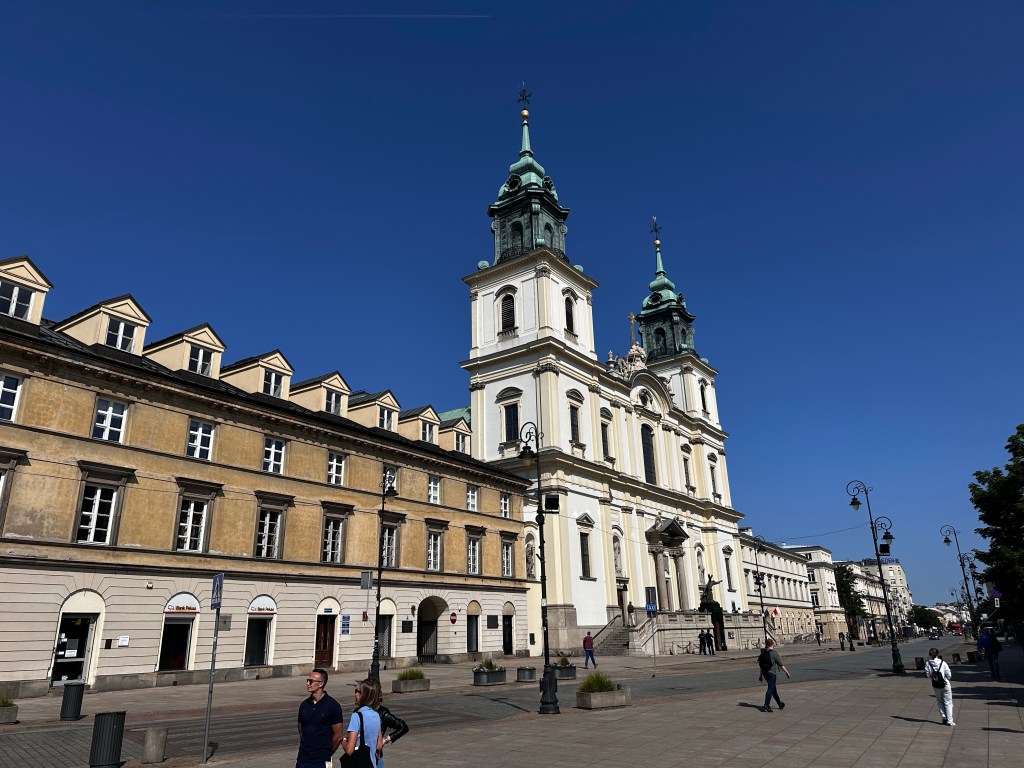
Above are pics of the Warsaw historic Royal Route, a path once reserved for kings and dignitaries.
We strolled through old town and stopped at 11:15 to hear a bugle playing from the clock tower. It happens daily and commemorates the moment the clock on the Castle Tower stopped on September 17, 1939, during the bombing of Warsaw by German planes.
We also had the opportunity to see the changing of the guards at the monument of the unknown soldier. It was created in 1924 to honor those died in WW1. On December, 28 1944 the Germans blew up the Saski Palace where it stood. The building was destroyed, but a fragment of the colonnade over the tomb partially survived. According to an unconfirmed legend, the German sapper did not dare to blow up the grave where the unknown soldier was buried and did not plant explosive charges there.
I decided to find a sidewalk restaurant for a late lunch. Nope did not have pierogi and this time Kielbasa!

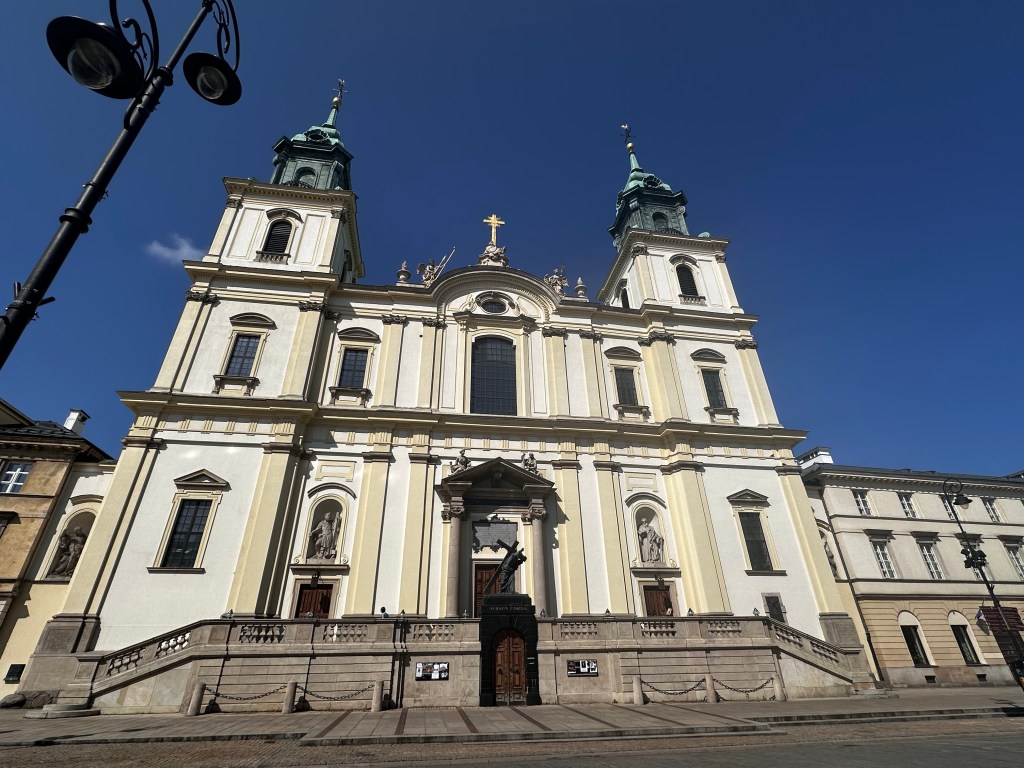
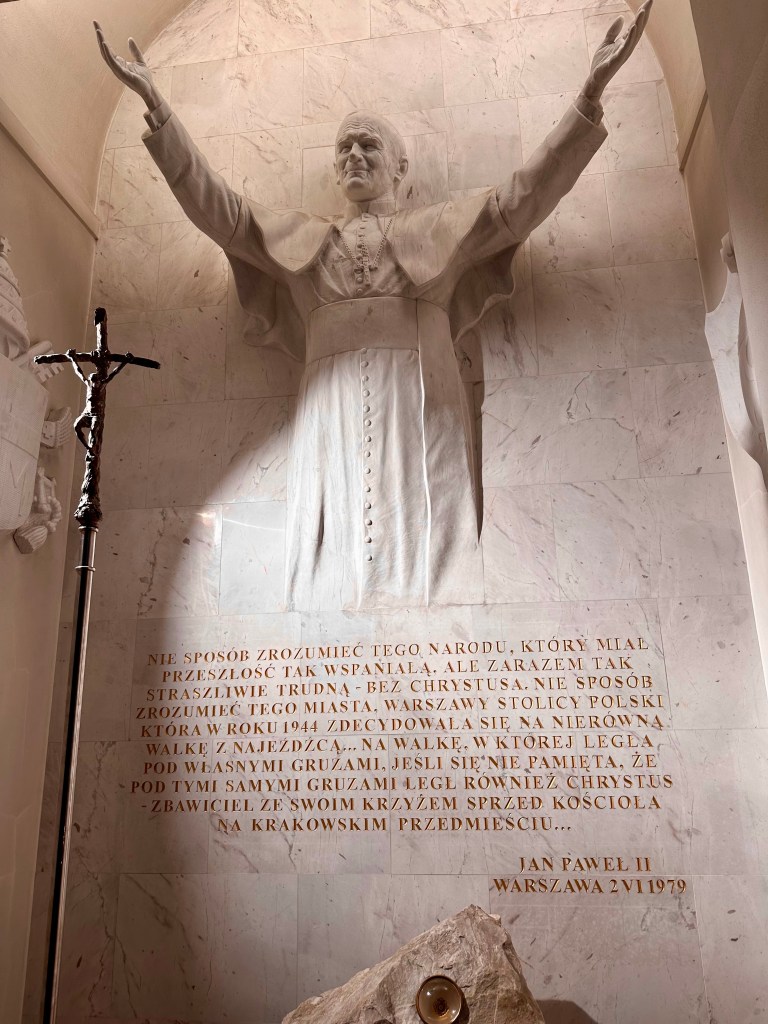
We stopped into Holy Cross church and I lit a candle for Mom and Aunt Pat in front of the Sacred Heart alter.


The Jewish Experience in Warsaw
On Sunday we went spent the majority of the day learning about the Jewish people of Poland—from the earliest immigration from Germany, through the horrors of the Holocaust, to the present-day efforts to preserve their culture and memory. We visited the POLIN Museum of the History and afterwards saw a portion of the actual ghetto wall. Horrifying.
A Salute to Ukraine
After a listening and learning about the wars this country has suffered we had the privilege of having a private Ukrainian dinner in our hotel. The owner of the hotel spoke to us about how Poles opened their houses and hearts to refugees to help their neighbor. They had complete empathy for those that are suffering what they themselves did. He had families living at the hotel that became workers and sang for us and spoke about the ongoing war in Ukraine. Their stories were raw and real, filled with resilience. We all stood when they played the Ukrainian national anthem in solidarity.
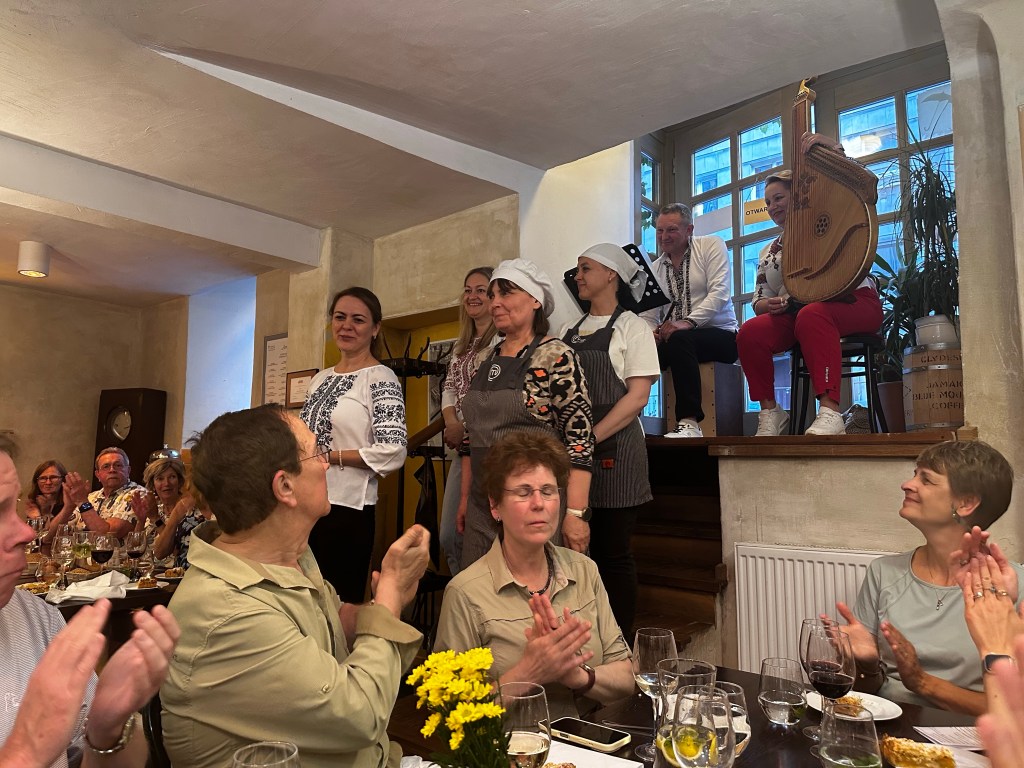

I leave Warsaw with a fuller heart—and a deeper understanding of what it means to endure, rebuild, and keep singing.
 Karen's JOI
What an incredible trip!