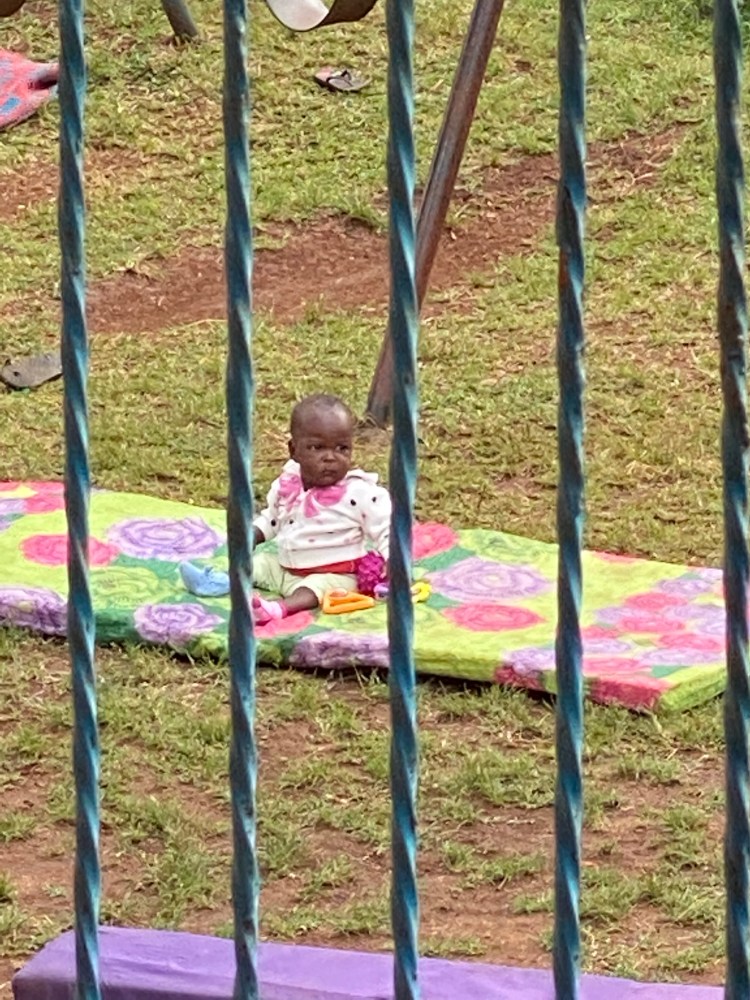
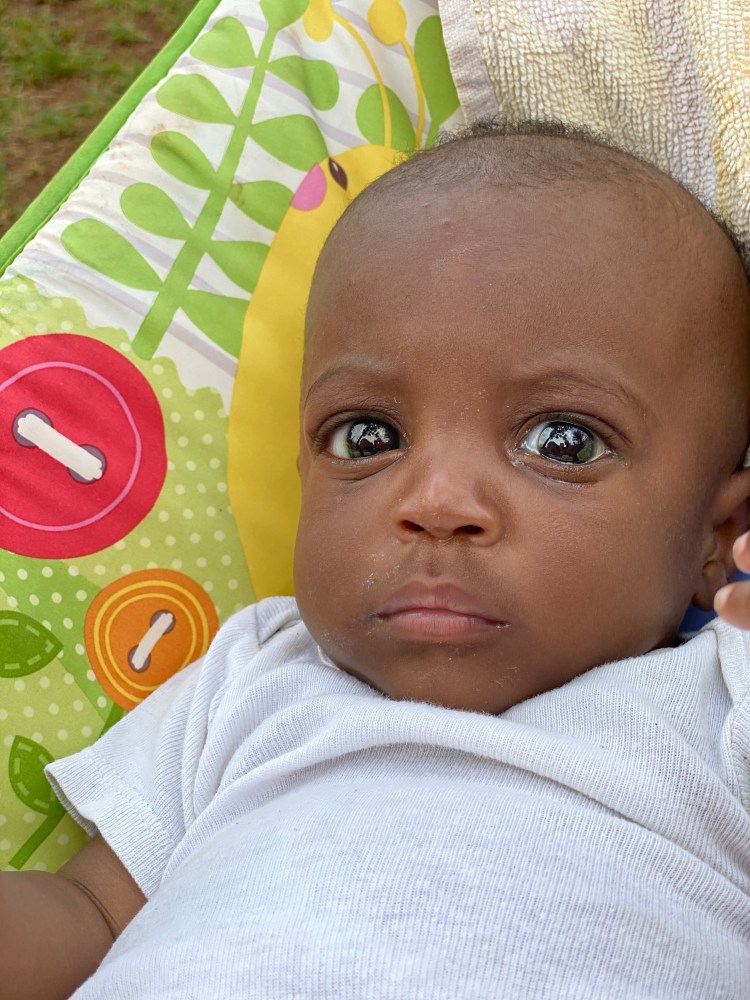
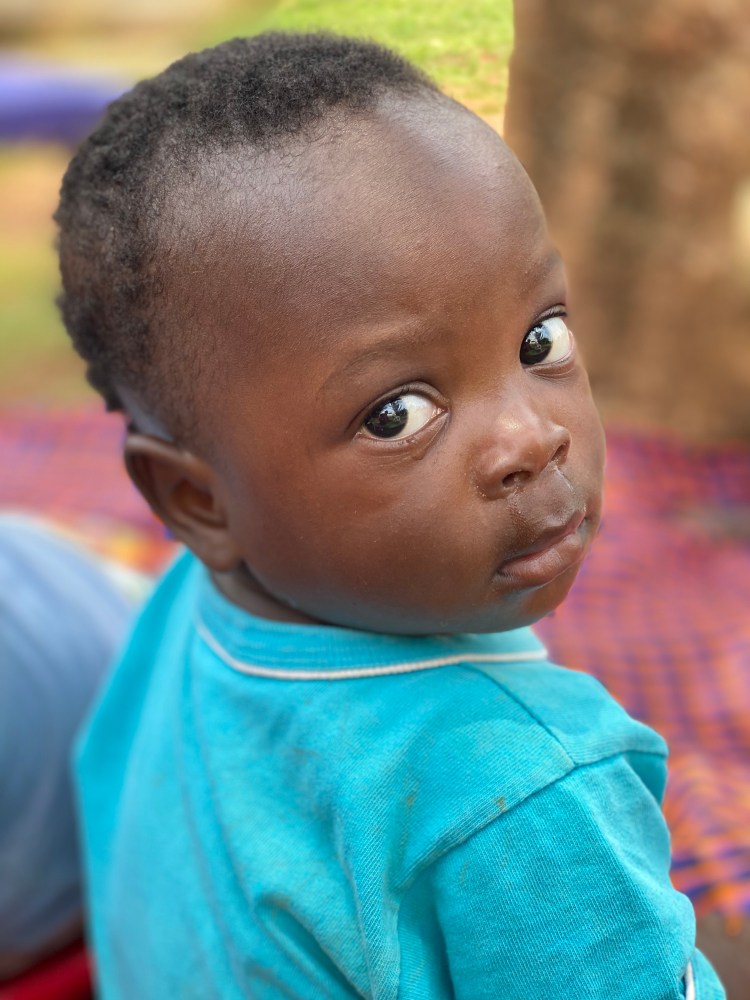
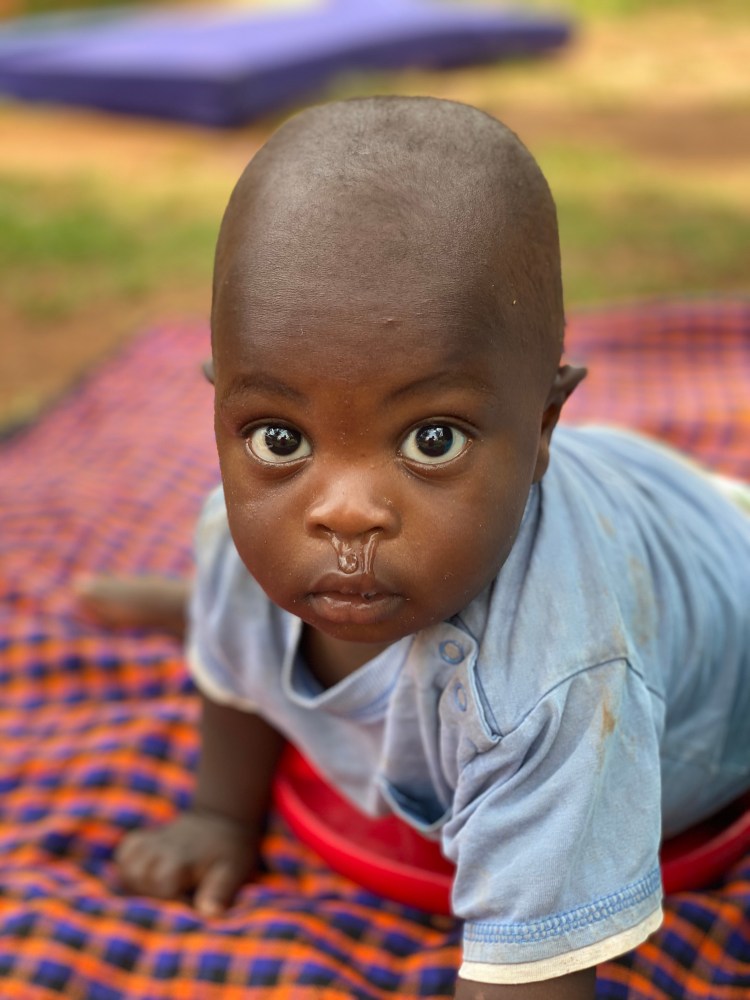
It’s a boys life where ever you go……..

The life the children have is so very different. There are no electronic gadgets to be entertained with, tv, or after school activities. There are no choices in what you can eat or what you want to wear. There are no movies or stories before you go to bed and no mother to comfort you when you wake up in the middle of the night. But despite the differences there are also similarities and boys will be boys.

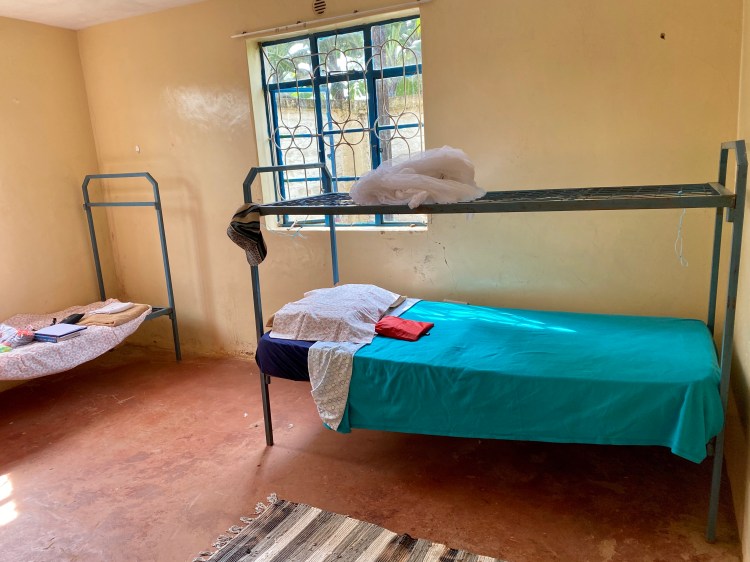
There are 7 boys here all around 7-8. They get up at the same time, get dressed in their school uniforms and wait upstairs in their rooms until called down for breakfast

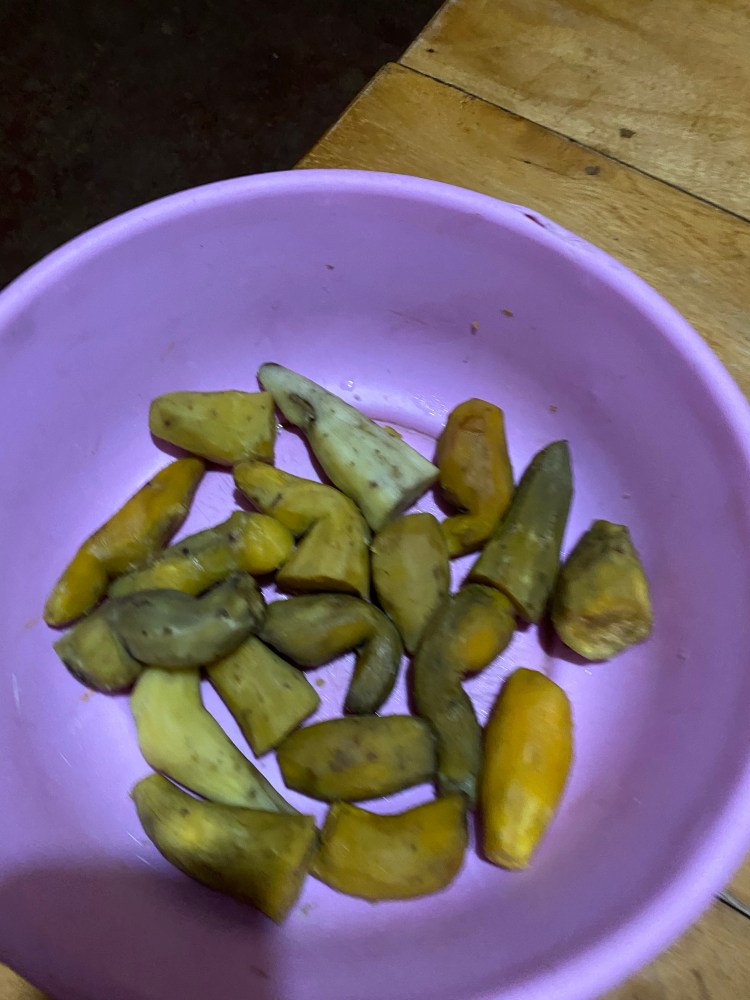
Breakfast may be a bit different then what your children eat for breakfast. Here they have chai tea and a root vegtable. They get some crakers as a snack but most of them are eating it on their way to school.

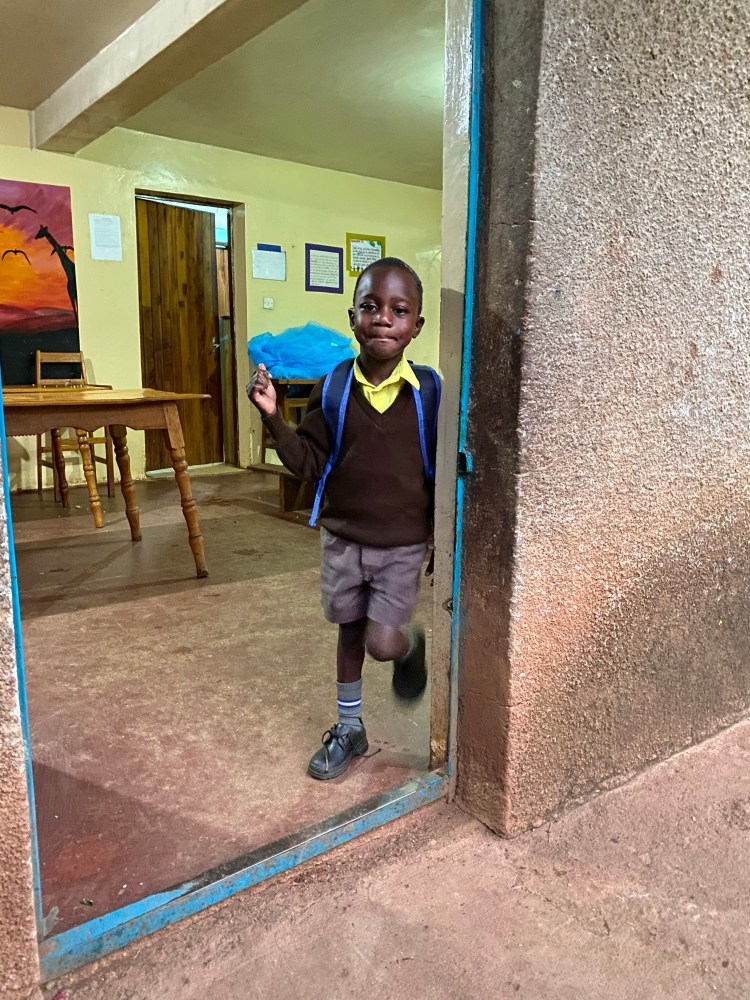
The children wear uniforms to school. Standard is a button down shirt, sweater and pants for the boys. It is the same for the girls but they wear a skirt. There is only one uniform for children so it is kept as clean as possible.
I was asked to walk them to school giving the Aunties a little head start on the day chores. The school is only up the street and as you can see running in the gutter is fun anywhere it is.

They get home for lunch and as many young boys need to do is nap before the afternoon play time. Even laying on a blanket on the floor they were fast asleep.

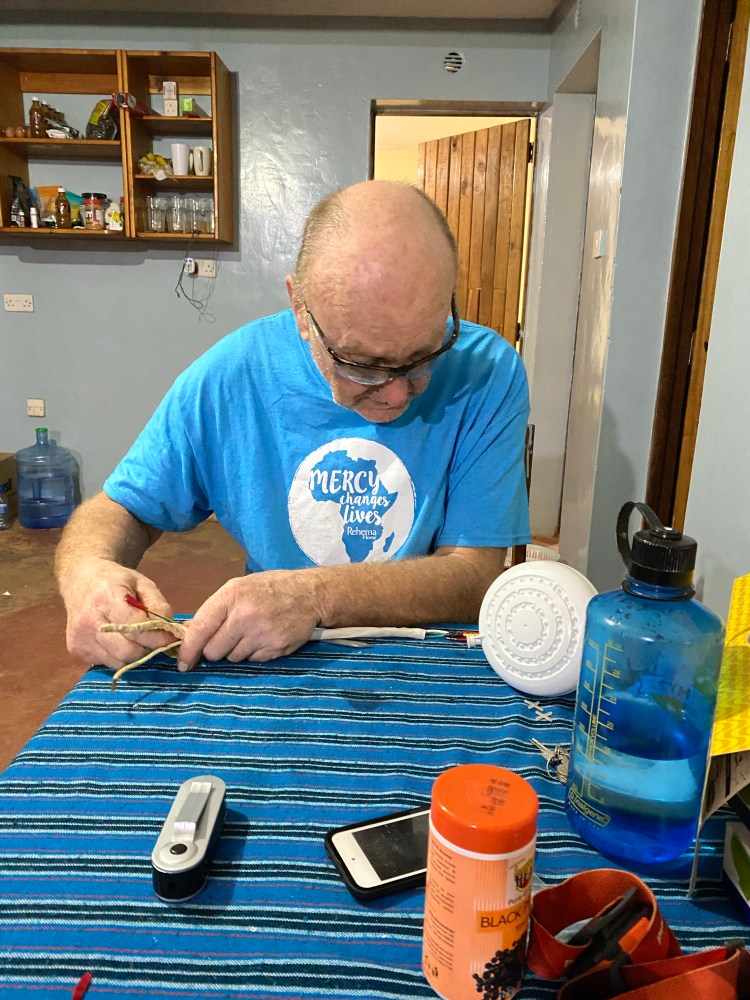
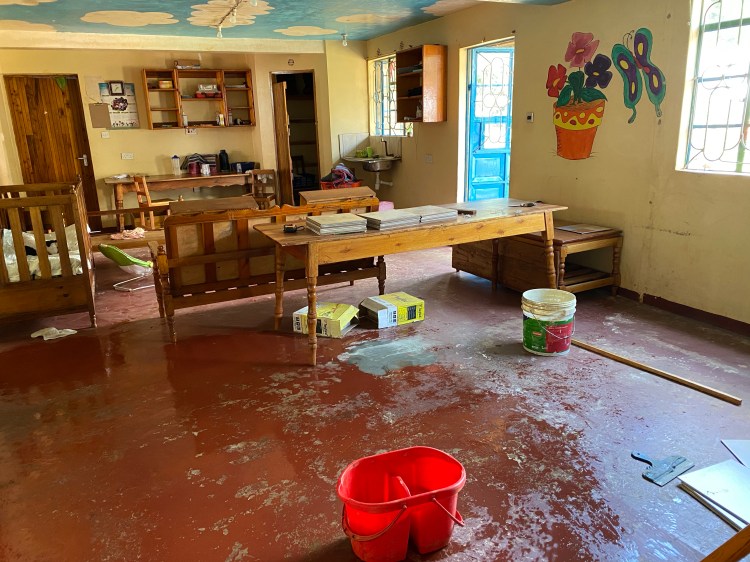
The nap gave Tom and I the chance to continue working on tiling without interruption from the kids but that did not last too long as one by one they came and found us and wanted to be part of the action. They just wanted to play with that mud!

As the crowd grew it signaled to me to take the boys upstairs to the play room and out of Mr. Tom’s hair. Books, coloring and making a car out of an old suitcase was the activity of the afternoon. I downloaded some music and had a sing-a-long to the Lion King.

Even here the boys have their chores. This little guy made sure the steps were cleared before dinner.

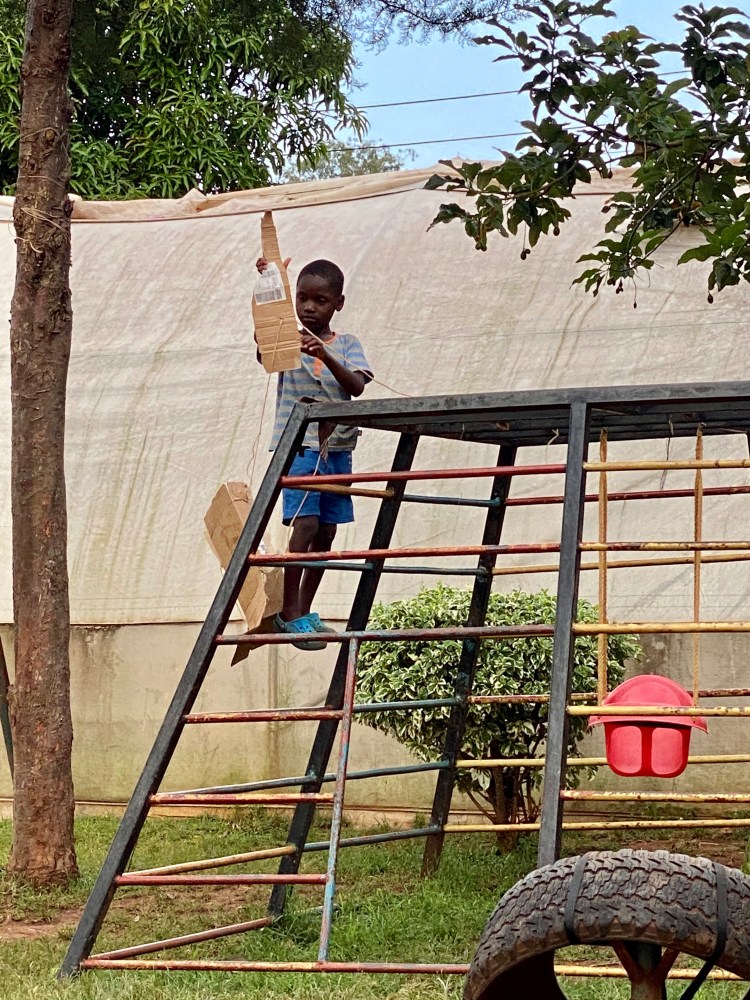
After dinner of rice and chipati for everyone there is more time for cheza and what little boy doesn’t use his imagination to make a rocket out of an old box.
The night ends with all the children gathering in one room to sing praises to the Lord and thank him for the blessing of all the wonderful things they have in their life and the people that love and care for them.

I will be doing the same tonight.

And now an update on Mr. Tom — or should I say my hero. For he worked on the shower head and we have warm water for the first time since getting here. In addition to tiling the floor he also serves as great entertainment to the children. Once a papa always a papa.

It takes a village — and more importantly a schedule.

Every morning at 6 am when you open the door to the babies room this is what you will find – and one is being changed and one is still asleep. These are the little ones and are so so precious. It is hard to understand why these children were abandon but I am not here to judge but to provide a hug when they are crying and a tickle to make them laugh.

The Aunties from the village are amazing. There are two women and a cook at all times helping to keep the child care machine running. They have it down to a precise schedule – one that is written out and hanging in our quarters.

600am – Babies up and start changing and dressing for the day and fed

630am – toddlers up, put on the potty, change for day, breakfast.

7am – last of school kids leave

9-11am – Babies nap

11am – Babies changed and bottle fed

12pm – Babies fed lunch

1245pm – younger kids arrive from school and eat lunch

2-3pm – Babies and toddlers nap. After their lunch they are typically brought out one by one to sit outside – of course after they are changed again (I did 7 diaper changes in record time)

430pm – Babies eat dinner

500pm – last of the kids arrive home and eat dinner

700pm – Bible and prayer

7-730 – Babies fed and all to bed. Karen included LOL.

I am in awe of the care that is given and the dedication of these women for so little in return. More on their story later.

And now a report on Mr. Tom:

Tom and I went into town to buy some items needed to start the tiling project. No, there is not a Home Depot but many little shops that may carry one or two or none of the items you need – grout and sand and a water heater. Water heater you say? Why would they need that – because the water heater to the shower does not work. How it works here is that there is a heater in the shower head. I still have hope in Mr. Tom to fix it.

He also started the tiling project – and yes “I helped” mostly by keeping the kids out of his way.

Still a long way to go and we will keep you up to date on the progress.

Good night all heading to bed – got them babies to get up soon.

Karibu To Bukura

We flew to Kisumo and after an hour flight on a small prop plane and an 1 1/2 hour drive we made it to Bukura Rehema house.

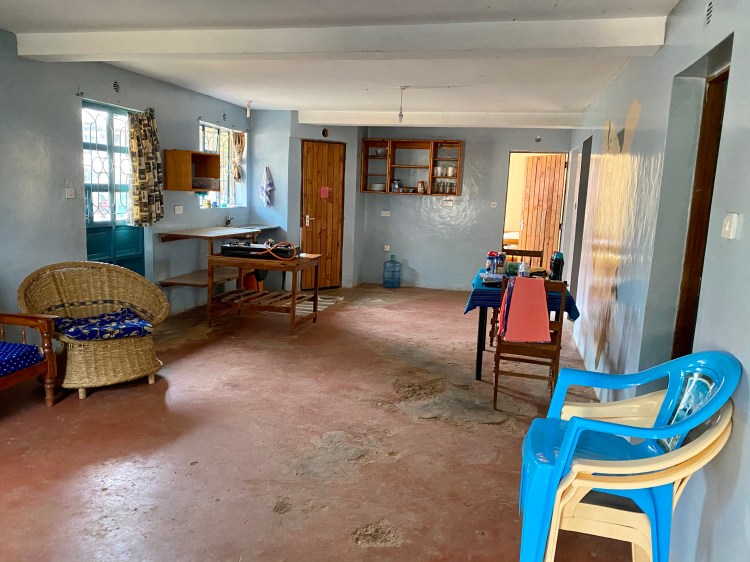
It is small gated compound with a building that houses volunteer and administrators living quarters. A small Kitchen building, another building for the mess hall and boys bedrooms. There is a 3rd building for the babies, toddlers and girls. There is also a shed, chicken coop and soon-to-be green house.

Here is my living area for the next two weeks.

Our hosts for the two weeks are Lauren and Natalya. They are the administrators of the home and manage the entire property with 7 Aunti’s from the village to help take care of the 25 children – 24 x 7. It did not take long for some of the kids to immediately approach the Wegani’s – white person.

This is Grace and she is a bold and beautiful little girl. She took to me right away and I now have a little shadow.

It will take me some time to adjust to the way of life for these little souls. I am going to remain open to better understand how to best help now and in the future. Heading to bed – there are 7 babies to help get up changed and fed and 7 little boys that need to go to school. There for the Grace of God go I.

Made it to Nairobi –

It has been a long trip so far but sooooooooo far so great. We left the house at 4am in Rochester and caught our first flight to JFK a quick 2 hour layover and a 9 hour flight to Doha, Qatar. Another 2 hour layover and a 6 hour flight to Nairobi. We landed around 3pm here (we are 8 hours ahead) and with all of our luggage – well almost. Our personal items for the two weeks are in our backpacks. The other suitcases are filled with the many donations of clothes and other items needed for both the children and the staff. One of the items that the staff asked for was over the counter painkiller drugs, Downey unstoppables washer freshener and coffee creamer. Tom also has packed computers that are going to Tanzania, an assortment of tools for handyman work and even a WiFi booster. The only item that did not make it was two bottles of French Vanilla Coffee Mate and that was kept by security in Rochester. They said it tested for traces of chemicals – well isn’t that what it is? We say a lot of folks wearing masks and the smell of Purel. They did check our temperature as we debarked off the plane other then that it was fairly normal.

In Nairobi we were met by two of the missionaries that work at Rehema Home Nairobi – Mark and Michelle. Mark is from Lima, NY and Michelle is from the Bronx. They are married and have lived here working as full time missionaries for 9 years. They took us to a place to exchange our money (101 shillings to $1US) get a SIM card and a bite to eat. They were so helpful in giving us some interesting facts about Nairobi (English is a native language) guidance about cultural differences, and eating dos and don’ts.

We finally got to the Guest House at 7pm where we need to get some sleep and back up at 4am for our flight over Lake Victoria to Bukura where our mission begins.

August 5: A Tour of Lima and Home

A last day was a relaxing day starting with a walk to the ocean to dip our toes in the south pacific.

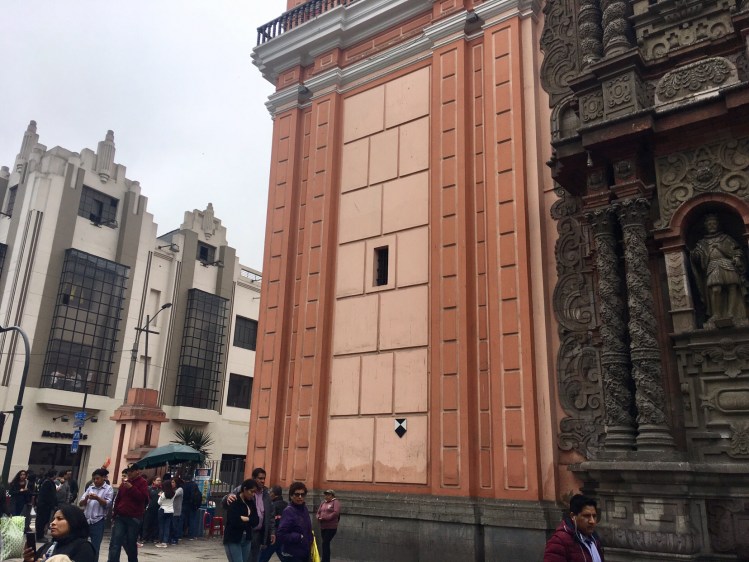
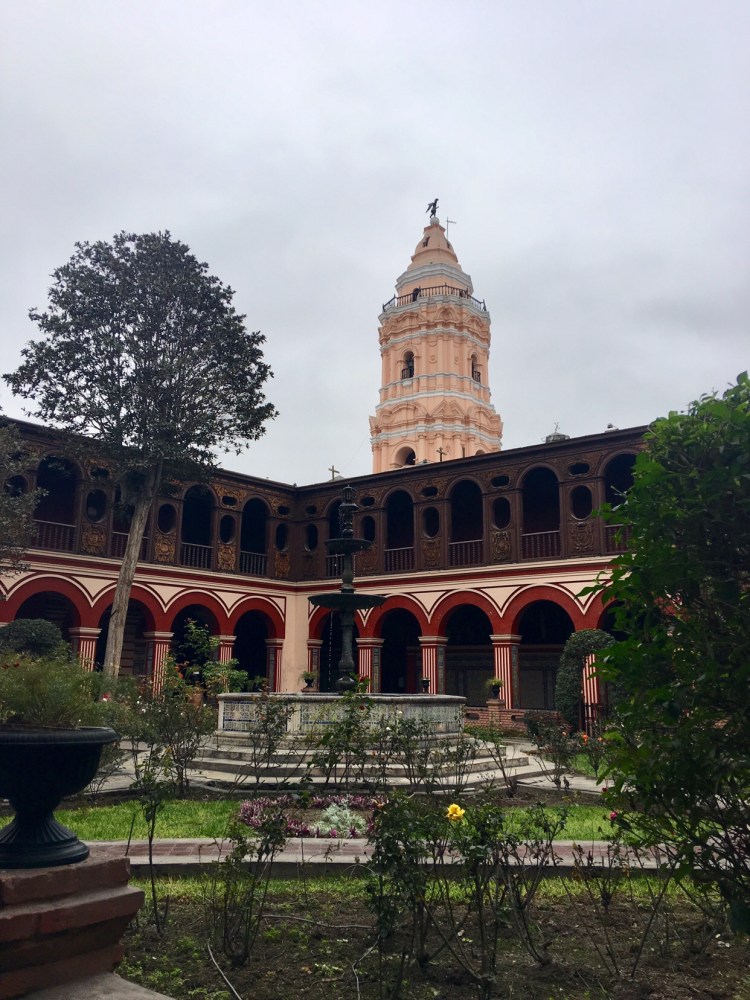
In the afternoon we had a tour of Lima. Lima is the capital and the largest city of Peru. I was stunned by the beauty of the architecture of the city.

In a museum there was this kitty sleeping in the midst of all the tours going on around him.  It reminded me of the two I had waiting at home for me and knew it was time to return home

Adiós y gracias Perú por un viaje de tu vida.

Amor y gracias por mi nueva familia.


August 4: To Lima we go

Today was a bus ride to the airport for our trip back to Lima.  Of course had time for one more last stop at an ancient site –Sillustani.  This was actually pre-incas and a burial site.  It was amazing to see the artistry and workmanship of the stone blocks.  The stone blocks were not erected into straight walls but rounded towers. These were.

There was always a small opening at the base, facing east. It is speculated that since the Inca, and presumably earlier people were “sun worshippers” these doors related to the religious belief system that it may guide the departed soul to some kind of afterlife.

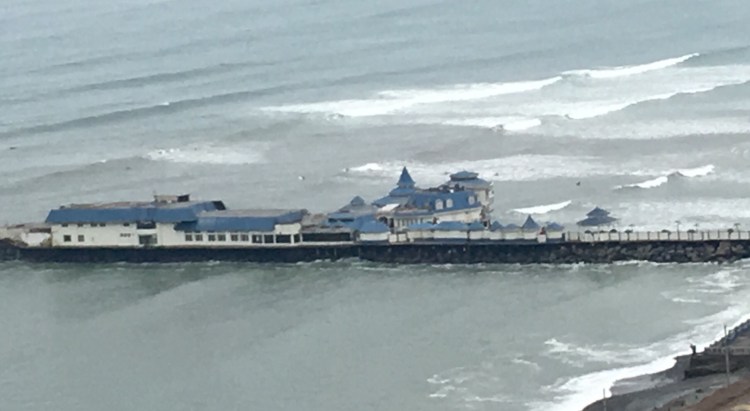
Landed in Lima  — with luggage.  We stayed in the Miraflores district of Lima, known for its upscale shopping and restaurants and very near the pacific ocean.  We were treated to a beautiful and wonderful dinner at La Rosa Nautical Restaurant.

August 3: The Island of Taquile

I stayed pretty warm during the night and was awakened at around 530am by the sunrise and sound of a donkey. No need for alarms here. I sat for awhile looking out the window and watched the community come alive. We had breakfast of quinoa pancakes and then our host mama took us to our boats by 8 am.

img_7548-1img_7549img_7551-1

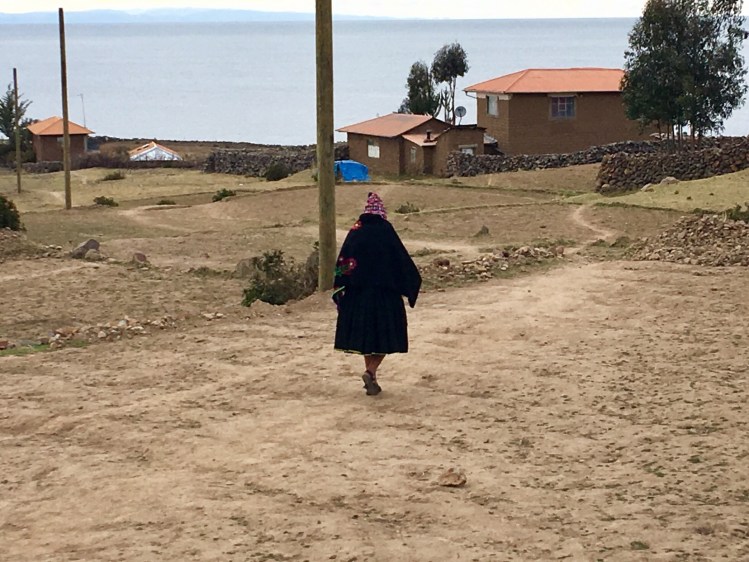
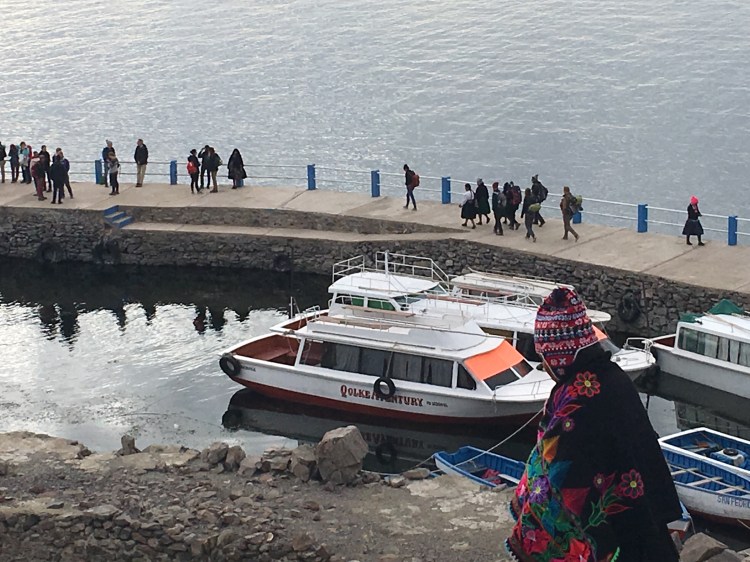
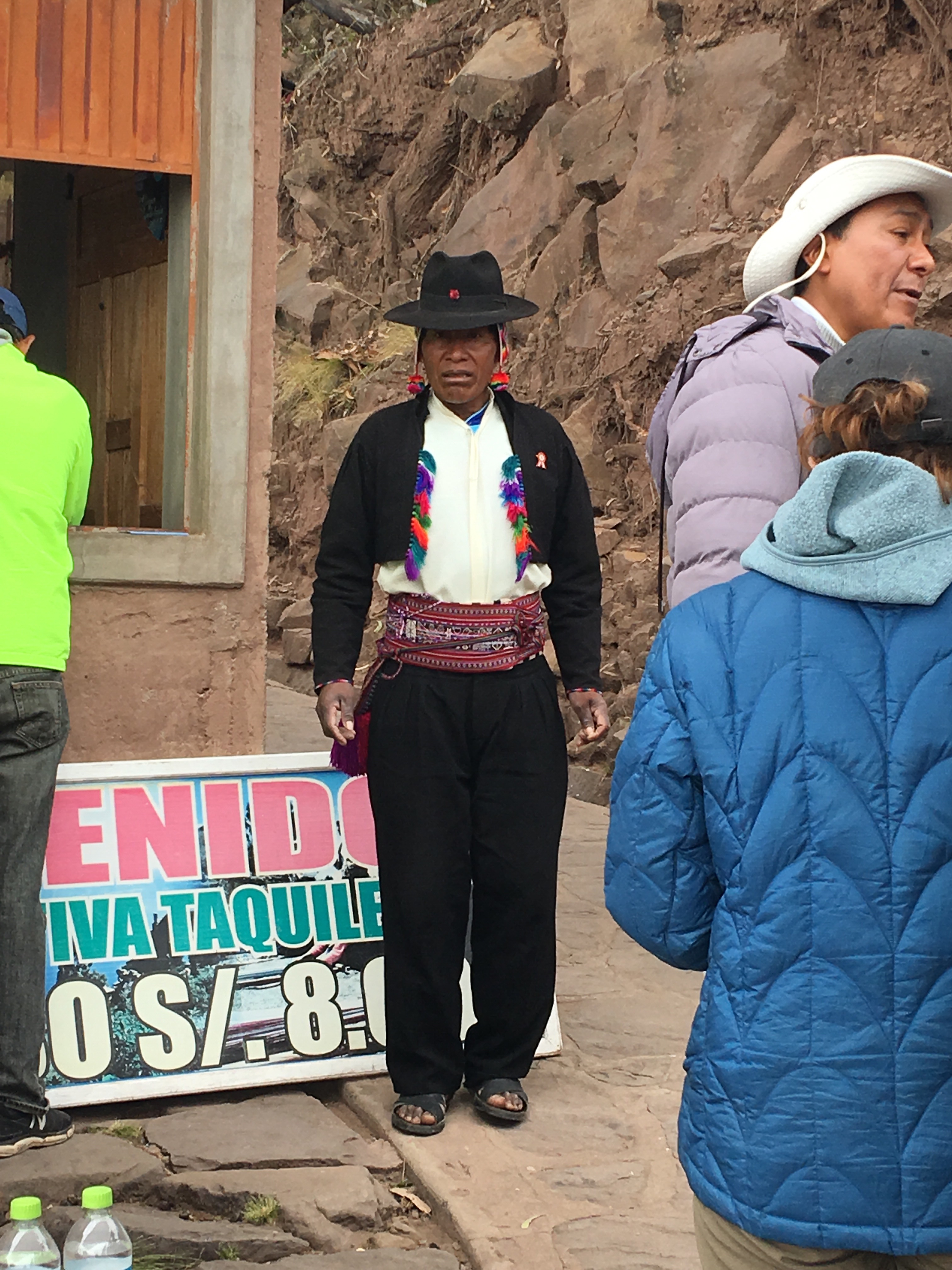
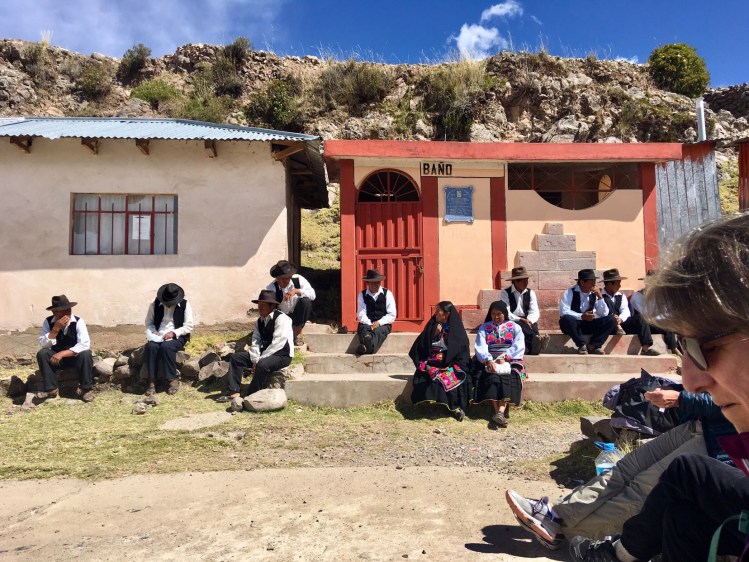
We took a short boat ride over to the island of Taquile. Our day would be spent walking around the island seeing and experiencing local culture. One of the local authorities was there to check us into the island. We would learn there are 20 of these men that volunteer to be the officials of the island. Each day they walk around taking to the members of the community to see if everything is ok. There are no police or firearms but they do carry whips.

The St James (San Santiago) Festival & Taquile Textile Art Fair

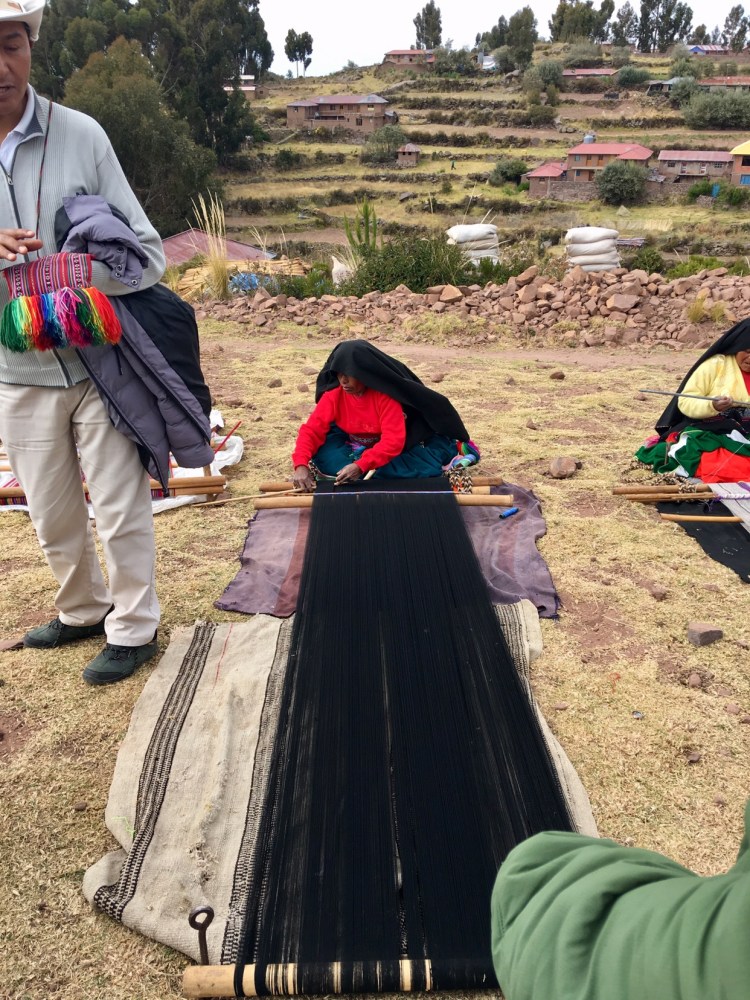
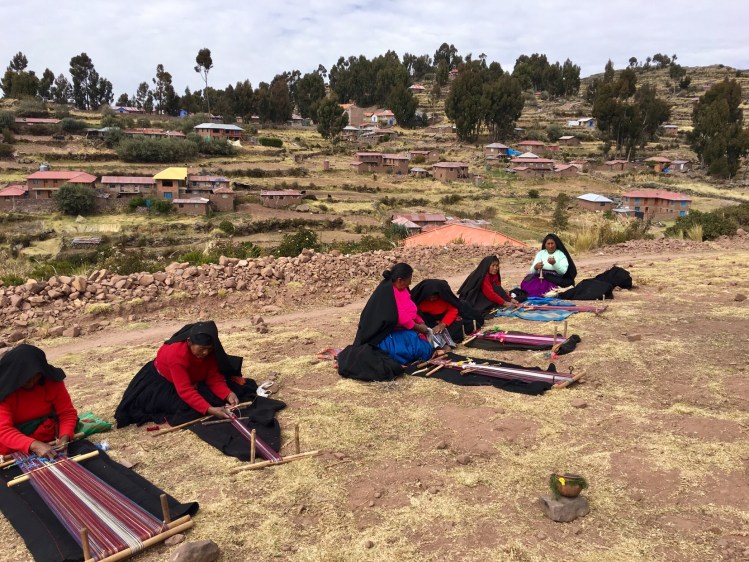
There are 2,200 Taquileans living on the island.  They speak Quechua and we were to learn that they live in a cooperative society where all work is done to benefit the community  The local economy bases itself on fishing, potato farming, textiles, and tourism.  The work such as knitting, a male task, and weaving, a female task, is undertaken as part of the daily chores.

We just happened to be visiting during the time of year that they had a festival dedicated to their patron saint, the Apostle James.  It hit me that St. James was appearing again in my life – the Camino de Santiago being the first.  They had demonstrations showing their how they made  their hand-woven textiles, considered the best in Peru.  Taquile´s textile art were proclaimed by UNESCO “Masterpieces of the Oral and Intangible Heritage of Humanity”.

When we reached the main plaza many of the community members and the officials were watching and enjoying singing and dancing.

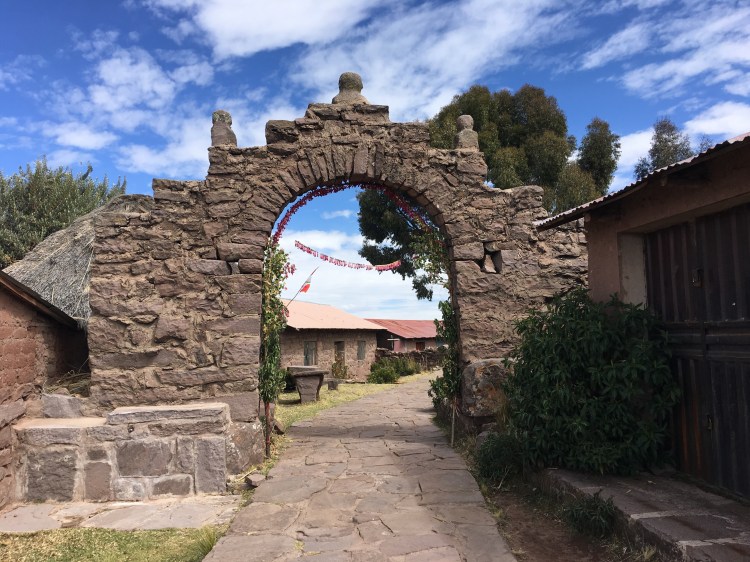
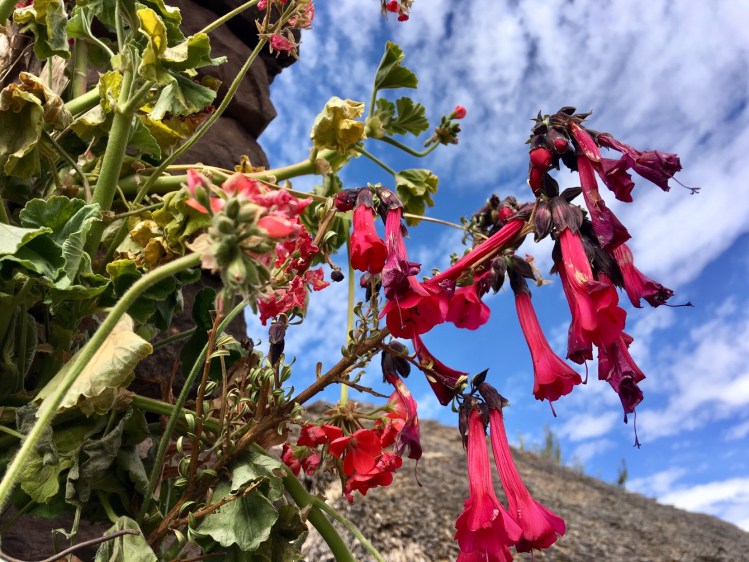
The doorways and arches were decorated with their national flower – Kantuta.

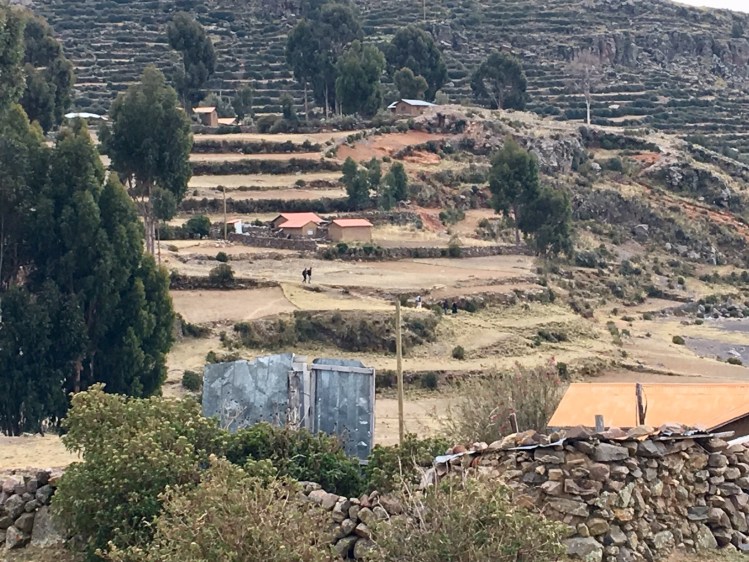
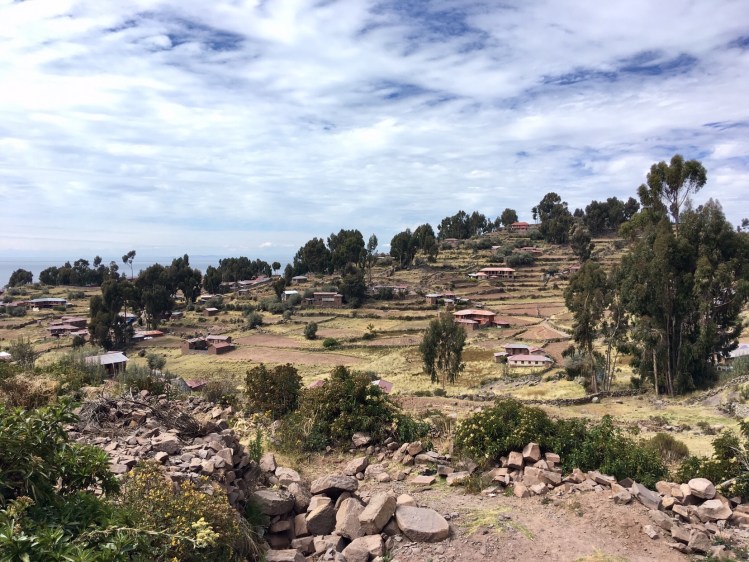
We walked along a beautiful path – the islands only way of getting around.  Our destination was the other end of the island where our boat would pick us up.

But first, we stopped at a wonderful and beautiful home for lunch.

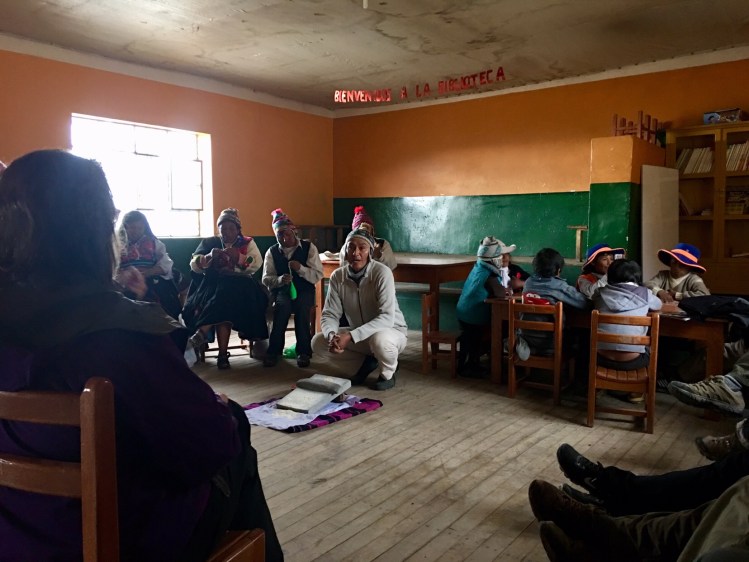
After lunch we were treated to a presentation about the local traditions and customs they’ve preserved for centuries:

No handshake, just coca leaves

When two people meet on Taquile, both parties pull out a handful of coca leaves from the waist bag on the right side and exchange. Chew the coca leaves first, and then you can start talking.

Prove your worth by drinking out of your knitted hat

When a man wants to marry a woman, he needs to prove his worth by drinking water out of his knitted hat. If the hat is knitted so tightly that the water doesn’t drip, he has successfully proved his abilities.

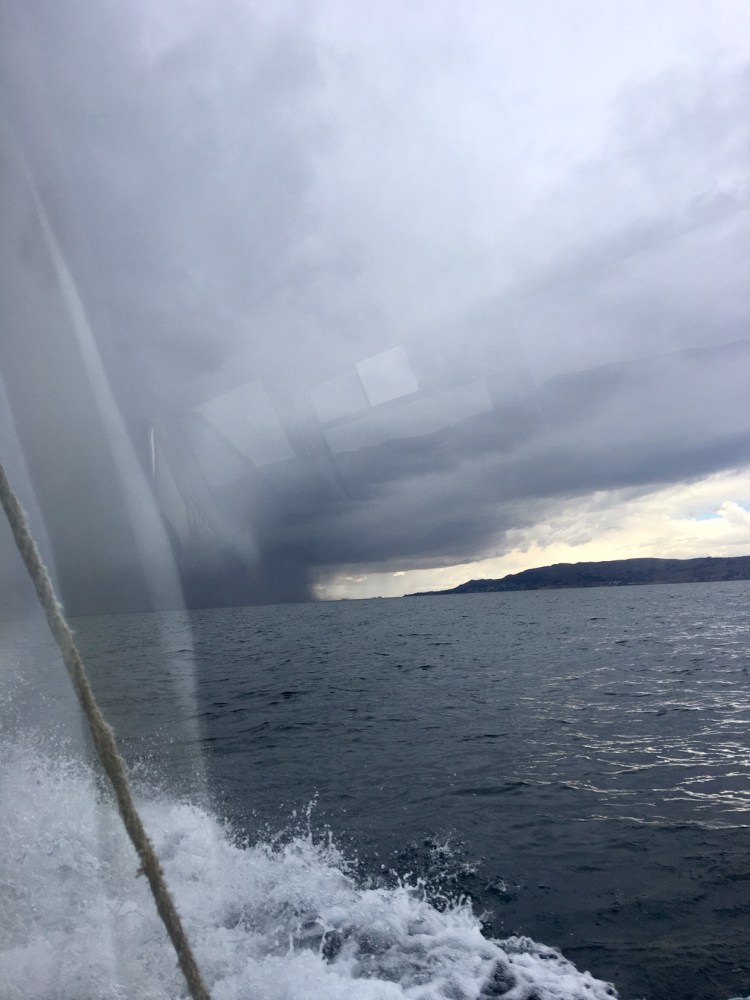
We thought we were in for a “perfect storm” kind-of trip back to Puno – but our captain simply went around it.

August 2: Titi – caca – titi – caca

Waking up in Puno – this is the view from our window.  If you look high to the right on the hill you will see a statue.  This is a statue of a condor.  The condor is part of the Incan trinity: Condor, Puma, Snake.  In these three animals, sky, earth, and the underworld are represented. Condor, we would learn, is the only bird strong enough to fly up to the heavens and deliver messages to God.  Puma has patience and strength. The snake travels to the underworld, and when it sheds its skin, is reborn, transformed. All part of the circle of life.  We would experience this belief throughout our trip in-scripted  in ancient sites, textiles, and modern symbols.

img_7417-3

2017-07-23

Today we met our guide José.  He will be the guide for our Lake Titicaca adventure and we headed to the docks. We were told to buy some gifts of rice, oil and fruit for our family hosts where we will be staying tonight on the Island of Amantani.

img_7434

img_7426-1

It was – again – a beautiful day and we had our own boat, traveling through the reeds towards the Uros Islands.

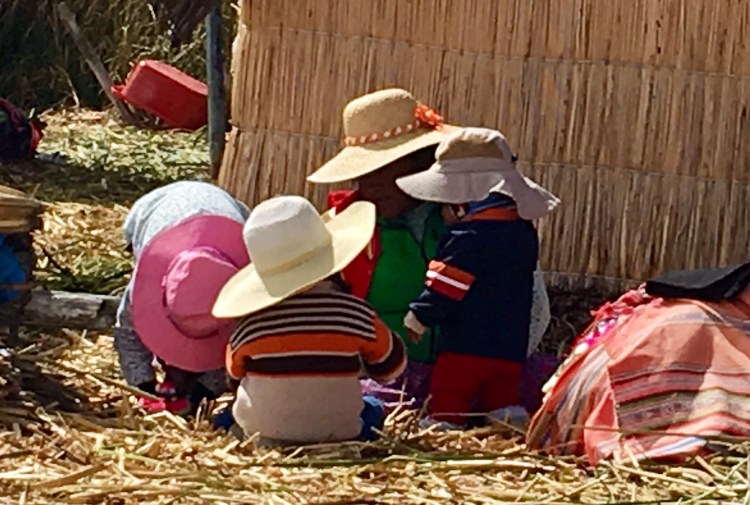
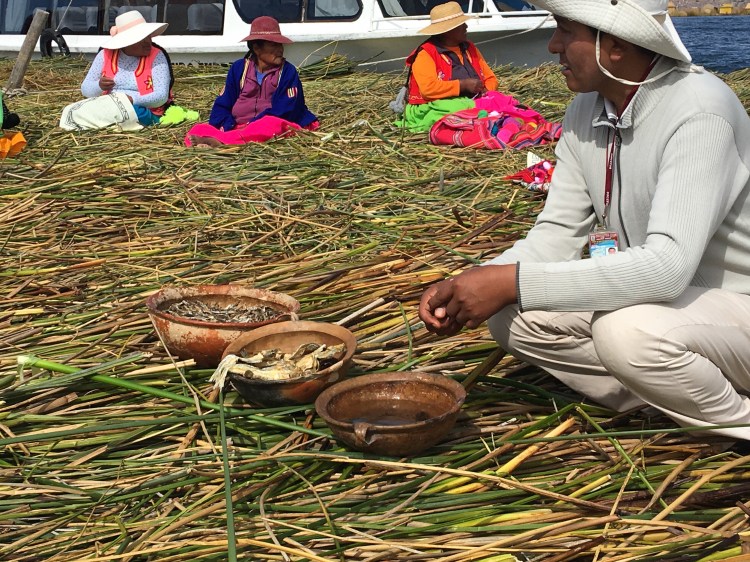
These islands are man/women made from the surrounding reeds and can each hold around 25 people or a few families. There are about 85 floating islands with approximately 2000 inhabitants.

It was not until the 90s that the island people allowed tourists to stop at their island. They have since embraced tourism but in their own way. The entire community shares the responsibility dividing the days that tourists can stop among them.

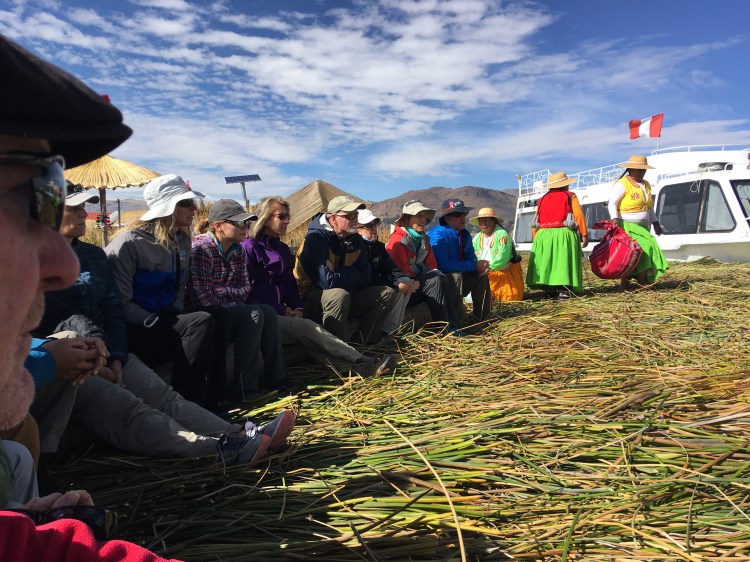
We were shown how the islands are made and how the people lived on these islands.

img_7462img_7456-1img_7476img_7479-1img_7466-1

A very cold ride on a Kon-Tiki boat compliments of Rick and we were back on the boat for a 2/12 hour ride around the peninsula of Capachica and to the isle of Amantani.

img_7484-1

On Amantani, we were met by our host families – our mama’s and papa’s for our overnight stay.  Names were called and I had the honor of joining Matt and Char to stay with a family.

img_7495-1

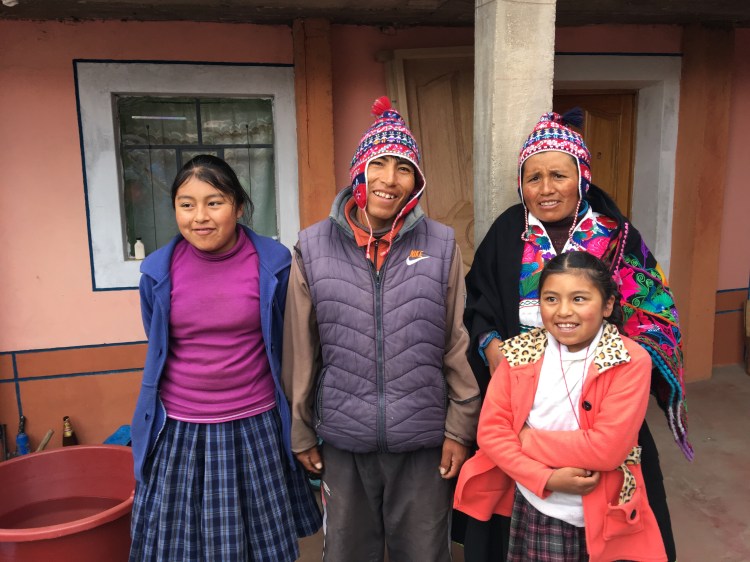
Our family of fourThe family speaks Quechua and understands a little Spanish and no English  – which proved to be a challenge to communicate but there is always the universal language of charades and children.

img_7543-1

We were served lunch in their kitchen of potato soup, okra, tomatoes and fried cheese. After lunch the three of us met up with the rest of our group to learn about the daily life of these farmers. Life has not changed very much over the 100’s and 100’s of years that these people have lived here. They still were traditional garb and are self sustaining. There are six communities on the island and a school. To our way of life it is very primitive but who is to say?

img_7514-1img_7500-1

There was another amazing experience waiting for us after dinner. We were dressed up in traditional dress and met in the community center for a good ole neighborhood dance.

img_7520At over 13,000 feet just walking up to the center was a challenge much less dancing. We all had a great time dancing together and with our host Mamas.
img_7523

It was very cold at night probably in the 30s and no heating in the homes. But they piled on at least five alpaca blankets on top of our beds that kept us warm.

August 1: A Bus Ride to Puno

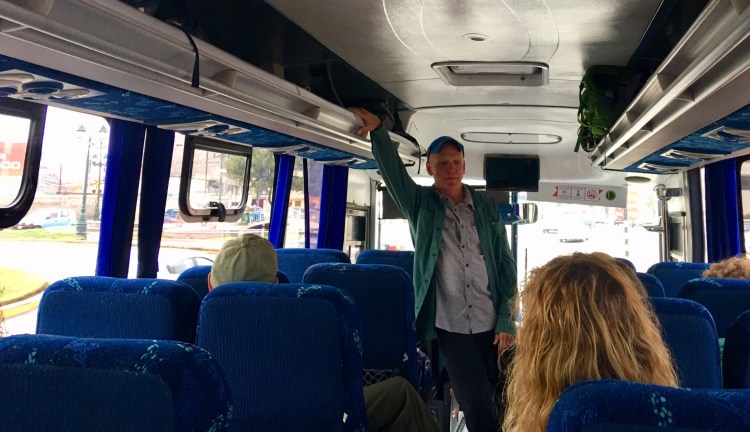
We left Cusco around 730am, loaded up a bus and headed out for a 7 hour journey to Puno – with Rick as our guide.

img_7395-3

We made a stop at the archeological site of Pikillaqta. We have been visiting Incan sites and this was pre-incan.  The amazing part of this site is the fact that it has been used since 5000BC

img_7397-2img_7400-2


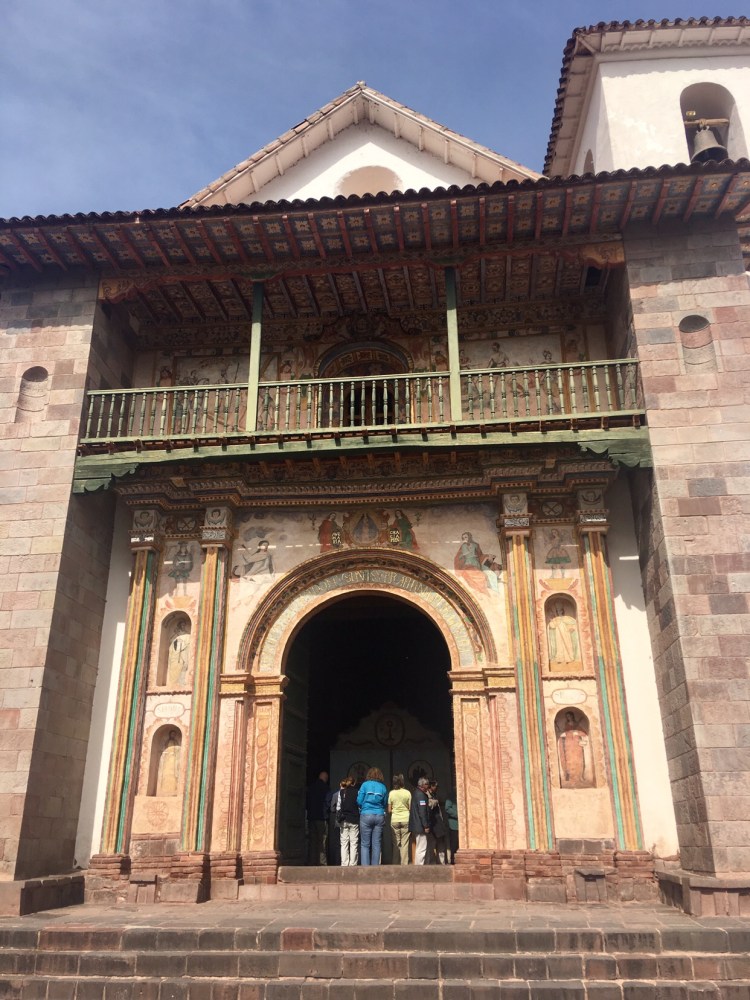
The Sistine Chapel of the Andes

We stopped at St. Peter the Apostle Church, Andahuaylillas. We were not allowed to take pictures inside but the link above takes you to a lovely video. This church acts as a community hub and feeds nearly 400 children a day, an after-school program, library  all supported in part from the fees to see the church.
img_7402-2

We continued driving through the country side seeing small farms being worked by women in tradition garb, cows and Llamas. We stopped at a rest stop at the top of a pass at 14,000 feet – the highest elevation of our trip.  There were ladies selling goods and even a bathroom. You can see the top of the bathroom which had actual toilets and a man with a bucket of water that would come in after you to flush.

img_7406-2

We made it to Puno and we stayed at the Qelqatani Hotel.  It was beautiful and just a few blocks off the plaza.

July 31: A Day in Cusco

Today was a day of laundry, shopping and enjoying the local cuisine. For me, the laundry was all the clothes I borrowed and the first day of wearing my own clothes.

Cusco

Cusco was was the historic capital of the Inca Empire from the 13th until the 16th-century Spanish conquest. In 1983 Cusco was declared a World Heritage Site by UNESCO. It has become a major tourist destination, hosting nearly 2 million visitors a year. The Constitution of Peru designates it as the Historical Capital of Peru.[2] In 1983 Cusco was designated as a World Heritage Site by UNESCO with the title “City of Cuzco”.  Like many places we visited it is a mixture of the traditional and the modern.

img_7370

img_7359-1

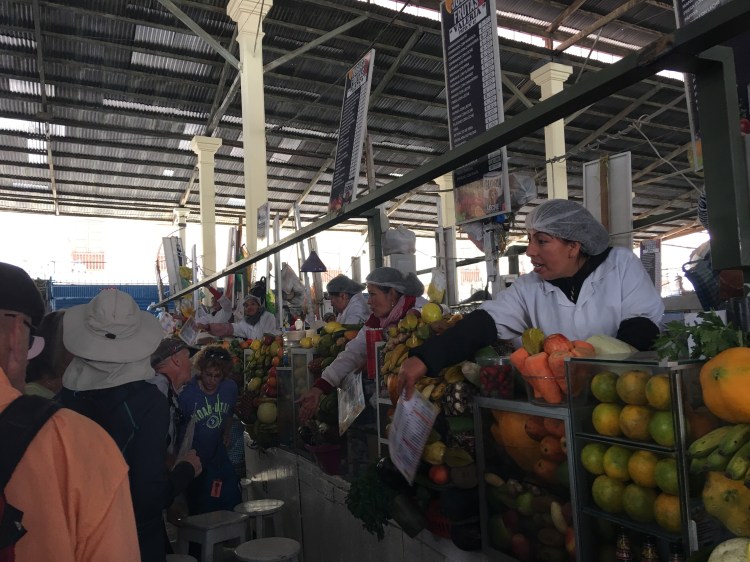
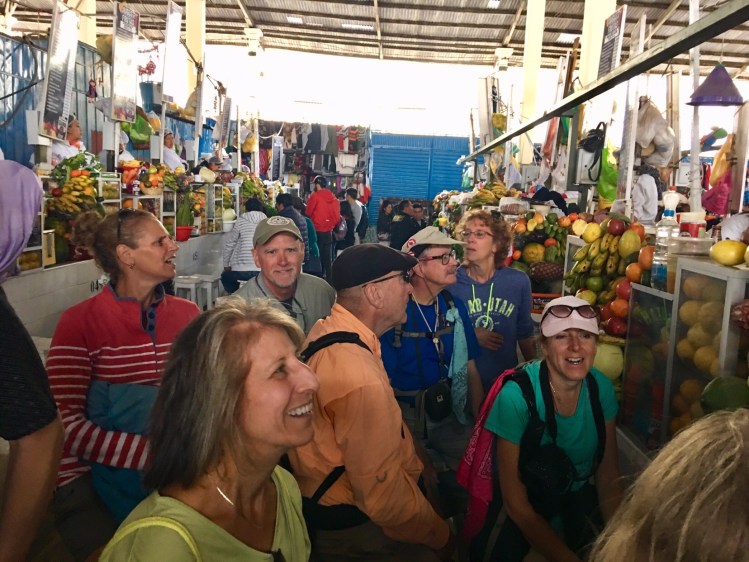
The first tasty experience was in the local market. As soon as you walk in there are rows of ladies waving at you to come to their station to make you fresh juice. It had everything in it. Fruit I had never heard of, vegetables, bee pollen honey and the secret ingredient was dark beer.

img_7365-1img_7366

After enjoying that treat everyone went their ways to explore the market. Rick and I set off to comb the market for food and snacks for our bus trip tomorrow. The market had everything. A isle of breads that were being sold by the local women, an isle of cheeses, rice, beans, fruits and potatoes. There was a isle of raw meat that we did not go down-it is not like Wegmans were everything is sliced, packaged AND refrigerated. Just a huge isle of slabs of unidentified meat and chickens. We bought fruit, nuts, empanadas and sweet bread.

img_7368img_7376

We all met back from our daily adventures for dinner at a wonderful restaurant complete with music and entertainment.

We interrupt these wonderful pics of delicious food to tell you about Cuy.

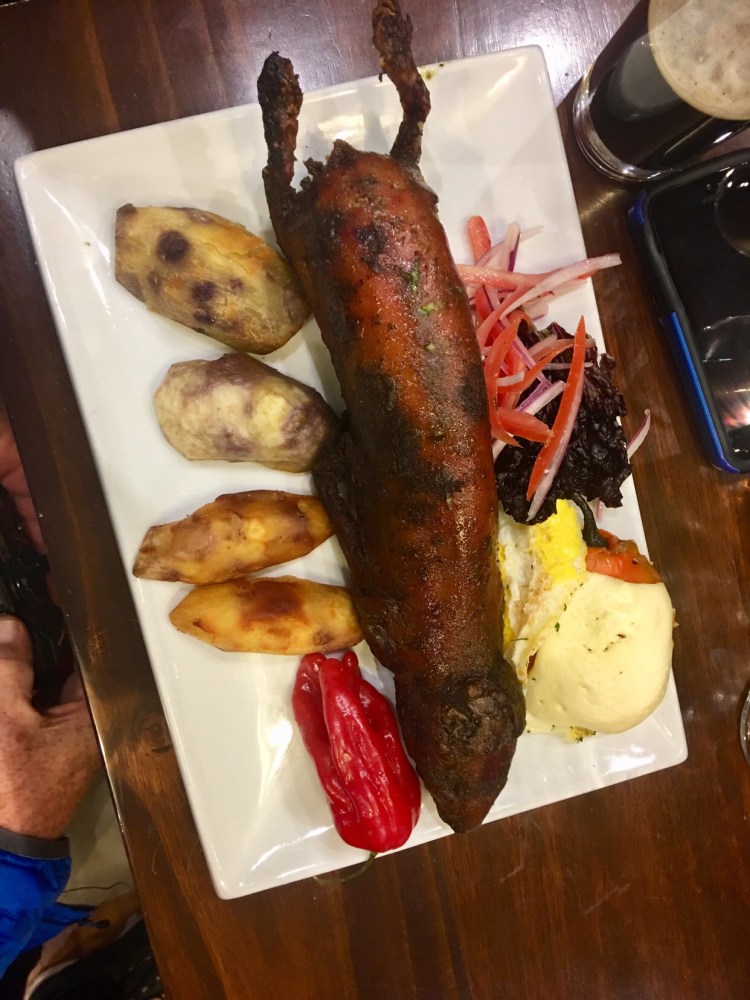
This would be a good time to tell you about Cuy. What animal sounds like Kweeeeeeee? Give up? Ok, I will tell you, Guinne pig. Guinne pig is eaten all over the area. You can order in restaurants or on the streets. Guinne pigs are pests for the farmers that eat the bread crops so there is an abundance of them. You have heard of Man vs Food.  Well we had Tom vs Cuy  – the brave one amongst us to try it.

img_7385

Ok, then — that’s it for this day……